The short answer
Biltong is a South African snack made from strips of meat, usually beef, that are cured with vinegar and salt, seasoned with coriander and other spices, then air-dried rather than cooked with heat. It differs from American jerky, which is thinner and dried with heat. Biltong is eaten as a high-protein snack, sliced thin or bitten straight from a stick. In the UK you can buy it from South African food shops, delis and butchers.
What to remember
- Biltong is air-dried, cured meat from South Africa, traditionally beef but also game like kudu, springbok and ostrich.
- The signature flavour comes from a vinegar cure and a coriander-led spice mix, which is what sets it apart from jerky.
- It is not the same as jerky: biltong is air-dried and cut thicker, while jerky is heat-dried and sliced thin.
- Look out for moist versus dry biltong, sliced versions, whole sticks and droewors, a dried sausage cousin.
- In the UK you will find biltong at South African delis, specialist butchers and African and Caribbean food shops.
For South Africans, biltong is not really a snack at all. It is a thread that runs through everyday life. It is what gets passed around at a braai while the fire settles, what fills a bowl on the coffee table during a rugby international, and what a parent tucks into a lunchbox or a suitcase. Ask a South African living abroad what they miss and biltong is almost always near the top of the list, right beside the smell of woodsmoke and the sound of a full stadium.
Part of that attachment is the making of it. Biltong is one of those foods families have opinions about. How much coriander, whether to add cloves, how long to dry it, moist or bone dry: these are the small inheritances passed from one generation to the next, and no two households agree entirely. A homemade batch hanging in a box in the kitchen is a quietly proud thing.
It also carries history. The drying of meat kept people fed through long journeys and lean seasons across Southern Africa, and biltong grew directly out of that practical need. What began as a way to preserve meat without refrigeration became, over time, a food people genuinely love and reach for by choice. That is the journey from necessity to comfort, and it is why a strip of spiced, air-dried beef can mean so much more than its ingredients suggest. For the South African diaspora in the UK, finding a shop that makes it properly is a small, real piece of home.
What is Biltong?
Biltong is a cured, air-dried meat that South Africans have made for generations. Strips of meat are soaked in a cure of vinegar and salt, rolled in a spice mix built around coriander, then hung to dry in cool, moving air until they firm up. The result is a dense, deeply savoury snack that keeps well and travels easily. It is one of the best loved foods to come out of Southern Africa, and for many South Africans living abroad it is a direct taste of home.
The name comes from Afrikaans: "bil" meaning rump or hind, and "tong" meaning strip or tongue, so biltong is literally a strip of meat. The method has deep roots. Indigenous Khoikhoi people preserved meat by drying it long before Europeans arrived, and Dutch settlers brought their own curing traditions using vinegar and spices. Those two approaches met at the southern tip of Africa and became the biltong recognised today.
Beef is the most common meat, but biltong is also made from game. Kudu, springbok and ostrich biltong are all popular, and each brings its own character, from the leaner, richer taste of venison to the darker flavour of ostrich. The cut matters too. A good piece of biltong balances lean meat with a little fat, which carries the spice and keeps the texture from turning tough.
How is Biltong made?
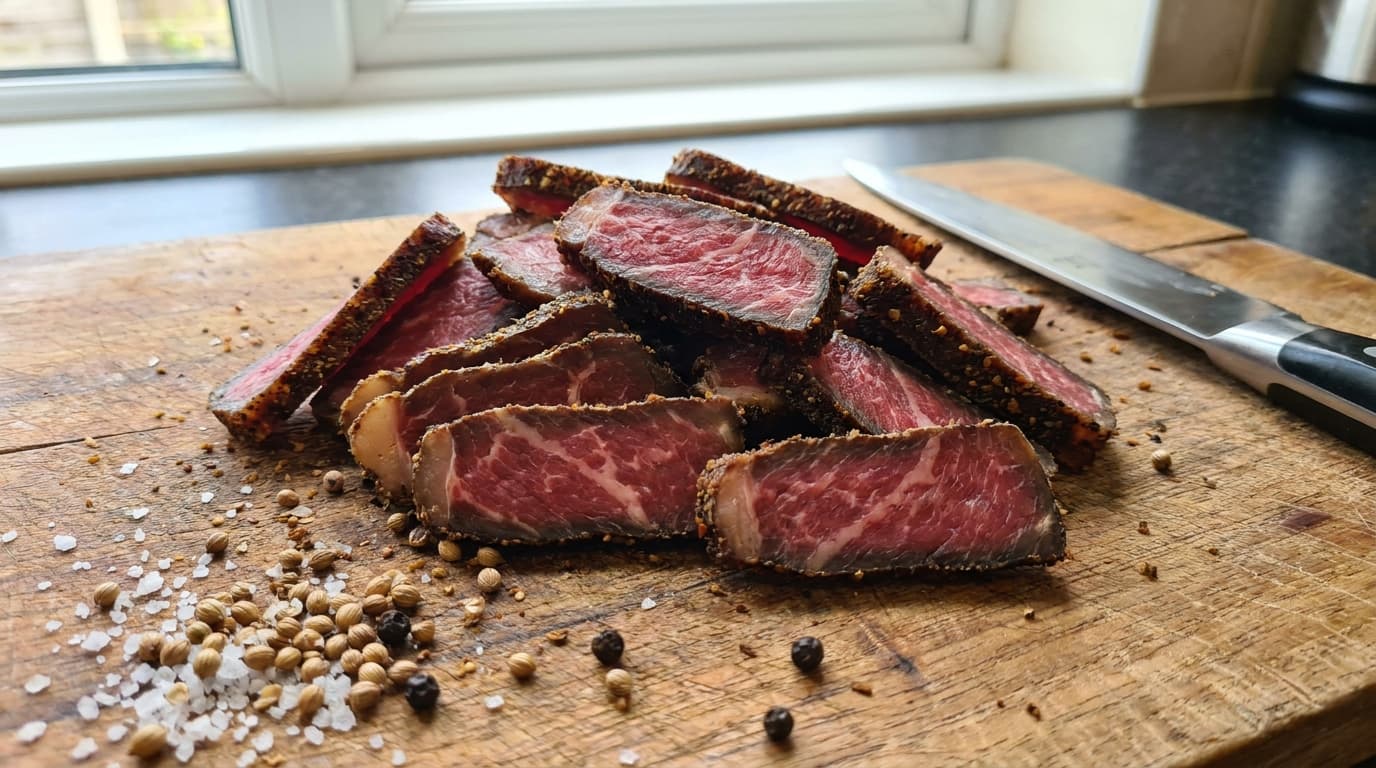
The process is simple in principle but takes patience. The meat is cut into thick strips along the grain, then covered in coarse salt to draw out moisture. After a short salting, it is dipped or brushed with vinegar, which both seasons the meat and helps preserve it. Then comes the spice: toasted, cracked coriander seed is the heart of it, usually with black pepper and sometimes brown sugar, cloves or nutmeg depending on the family recipe.
Once seasoned, the strips are hung in a cool, dry, well-ventilated space. Air movement is key. Traditionally biltong was dried in the open air; today many people use a simple biltong box with a small fan and a light bulb to keep air circulating. Depending on the thickness and how dry you like it, drying takes anywhere from a few days to a couple of weeks. Nothing is cooked. The meat is preserved by salt, acid and airflow, which is exactly why biltong has such a distinct texture and taste.
Biltong vs Jerky
This is the question people ask most, and the honest answer is that biltong and jerky are genuinely different foods that happen to share a shelf. They are not two names for the same thing.
The first difference is drying. Jerky is dried with heat, usually in a low oven or a food dehydrator, which cooks the meat as it dries. Biltong is air-dried at cool temperatures, so it is cured rather than cooked. That single difference changes everything that follows.
The second is the cure and the spice. Jerky is typically marinated in a sweet and salty, often smoky sauce, leaning on soy, sugar and sometimes liquid smoke. Biltong is built on a vinegar cure and a coriander-led spice blend, which gives it a tangy, warmly spiced flavour rather than a sweet, smoky one.
The third is the cut and texture. Jerky is sliced thin and tends to be chewy and uniform. Biltong is cut thicker, so a stick has a dark, spiced outer edge and a softer, pinker centre. You can slice it into coins or bite straight into a whole piece. If you have only ever eaten jerky, the first taste of proper biltong is a real surprise.
Types of Biltong
Once you start looking, biltong comes in more forms than you might expect.
Moist versus dry is the main choice. Moist biltong is dried for less time, so it stays softer and more tender in the middle. Dry biltong is left longer until it is firm and intense, closer to a hard snack. Neither is more correct; it comes down to preference, and many shops let you choose.
Then there is the format. You can buy biltong as ready-sliced pieces, easy to share from a bowl, or as whole sticks to slice yourself with a small cutter, which many people feel keeps it fresher. Sliced is convenient; a stick is the traditionalist's choice.
Droewors deserves its own mention. It is a dried, spiced sausage made from the same family of flavours, thin and snappable, often eaten alongside biltong. If biltong is the steak of the snack world, droewors is its coiled, moreish sidekick. You will usually find both wherever biltong is sold.
How to eat Biltong
Biltong is, first and foremost, a snack eaten on its own. It is the classic thing to have with friends over a rugby match, at a braai, or simply to keep in the cupboard for when hunger strikes. Being high in protein and low in sugar, it has also found a following among people looking for a filling savoury snack.
Beyond snacking, biltong earns its place in cooking. Grated or finely chopped, it lifts a savoury muffin, a potato bake or a cheese board. It is wonderful scattered over a salad, stirred into a pâté, or served with a sharp cheddar and a glass of red wine. Sliced thin, it works as a starter with nothing more than good bread. However you eat it, a little goes a long way, because the flavour is concentrated.
Where to buy biltong in the UK
The good news for anyone in Britain is that biltong is easy to find once you know where to look. Many towns and cities with a South African community have delis and butchers that make it fresh on site, which is almost always better than a factory-sealed pack. Specialist South African food shops carry biltong, droewors and the spice mixes to make your own, and plenty of African and Caribbean food shops stock it too.
If you are not sure what is near you, africanstores.co.uk helps you find African and Caribbean shops, restaurants and services in your area, so you can track down a counter that slices biltong to order rather than settling for whatever a supermarket happens to carry. To explore what is available where you live, browse African food stores near you, and read more about the wider cuisine in our guide to South African food.
Frequently asked questions
Is biltong the same as jerky?
No, and it is worth knowing the difference. Jerky is dried with heat, so it is effectively cooked, and it is usually marinated in something sweet and smoky. Biltong is air-dried at cool temperatures with a vinegar cure and a coriander-led spice mix, and it is cut thicker. They taste and feel quite different.
What meat is biltong made from?
Most often beef, but biltong is also made from game like kudu, springbok and ostrich. A good piece has a little fat running through it, which carries the spice and keeps the texture tender rather than tough.
Is biltong healthy?
Biltong is high in protein and generally low in sugar, which is why many people like it as a savoury snack. It can also be quite salty, so it is best enjoyed in sensible amounts as part of a balanced diet.
How long does biltong last?
Because it is cured and dried, biltong keeps well. Drier biltong lasts longer than moist biltong, and both keep best somewhere cool and airy rather than sealed up tight, which can make it sweat. Once you open a pack, it is at its best eaten within a week or two.
Where can I buy biltong in the UK?
Look for South African delis, specialist butchers who make it on site, and African and Caribbean food shops. A counter that slices it fresh to order is usually the best bet, and africanstores.co.uk can help you find one near you.