The short answer
Amala is a smooth, soft, dark brown swallow from the Yoruba people of southwestern Nigeria, made from yam flour, called elubo, which is dried peeled yam ground to a fine powder. The flour is stirred into hot water until it becomes a smooth, stretchy dough, and its dark colour comes naturally from the dried yam. It is a swallow, eaten by tearing off a piece and using it to scoop up soup, and its classic partners are ewedu and gbegiri, often served together as a combination called abula. Amala can also be made from cassava flour or plantain flour, giving lighter or different-coloured versions. In the UK the yam flour is sold ready to cook by African food shops.
What to remember
- Amala is a smooth, dark Yoruba swallow made from yam flour, known as elubo.
- Its dark brown colour comes naturally from the dried peeled yam, not from any colouring.
- It is eaten by tearing off a piece to scoop up soup, in the manner of a swallow.
- Its classic partners are ewedu and gbegiri, often served together as abula.
- Versions also exist from cassava flour or plantain flour, and the flour is sold by African food shops.
For Yoruba people in Britain, amala is deep home comfort. It is the soft dark swallow with ewedu and gbegiri, the plate of abula at a family gathering or a favourite eating house, the food that tastes of Ibadan and Lagos and home. Its dark colour and soft texture are instantly familiar to anyone who grew up on it, and cooking a good amala far from home brings that comfort and belonging straight back to the table.
There is heritage in it too. Amala carries the food culture of the Yoruba, the drying and milling of yam into elubo, the smooth stirring of the swallow, the soups that go with it, and to make it is to keep that tradition alive. Cooking a smooth, dark amala and sharing it with family who grew up on it, or introducing a friend to abula for the first time, is an act of welcome and belonging. That soft, familiar taste of home is the quiet gift of amala.
What is amala?
Amala is one of the best-loved foods of the Yoruba people of southwestern Nigeria, a smooth, soft, dark swallow that is a staple of home cooking and buka eating houses alike. It is made from yam flour, known in Yoruba as elubo, which is simply peeled yam that has been dried and ground to a fine powder. When this flour is stirred into hot water and worked until smooth, it becomes a soft, stretchy, dark brown dough that is eaten with soup. The word swallow describes exactly how it is eaten, in soft pieces scooped through soup and swallowed rather than chewed at length.
The most striking thing about amala to a newcomer is its dark colour, and it is worth saying plainly that this is entirely natural. As the peeled yam is dried, it darkens, so the flour and the finished amala are a deep brown, sometimes almost grey-brown, with no colouring added. Far from a fault, this dark colour is the mark of proper yam amala. It belongs to the wider family of Nigerian and West African staples we cover in our guide to West African food.
How is amala made?
Understanding elubo, the yam flour, explains amala. Traditional amala is made from yam, the same starchy tuber used for pounded yam, but instead of boiling and pounding fresh yam, the yam is peeled, sliced, dried and milled into a fine flour that keeps for a long time and cooks in minutes. This makes amala quicker and more convenient than pounded yam while still tasting of yam. The flour is stirred gradually into hot water and worked with a wooden turner until it is smooth, lump-free and stretchy.
There is more than one kind of amala, which is worth knowing when you shop. Amala isu, made from yam flour, is the classic dark version. Amala lafun is made from cassava flour and is paler, while amala ogede is made from unripe plantain flour and has its own colour and flavour. All are cooked the same way and eaten as swallows, so the choice comes down to taste and what is on the shelf. For most people amala means the dark yam version, and that is what the yam flour, elubo, is for.
What can amala be eaten with?
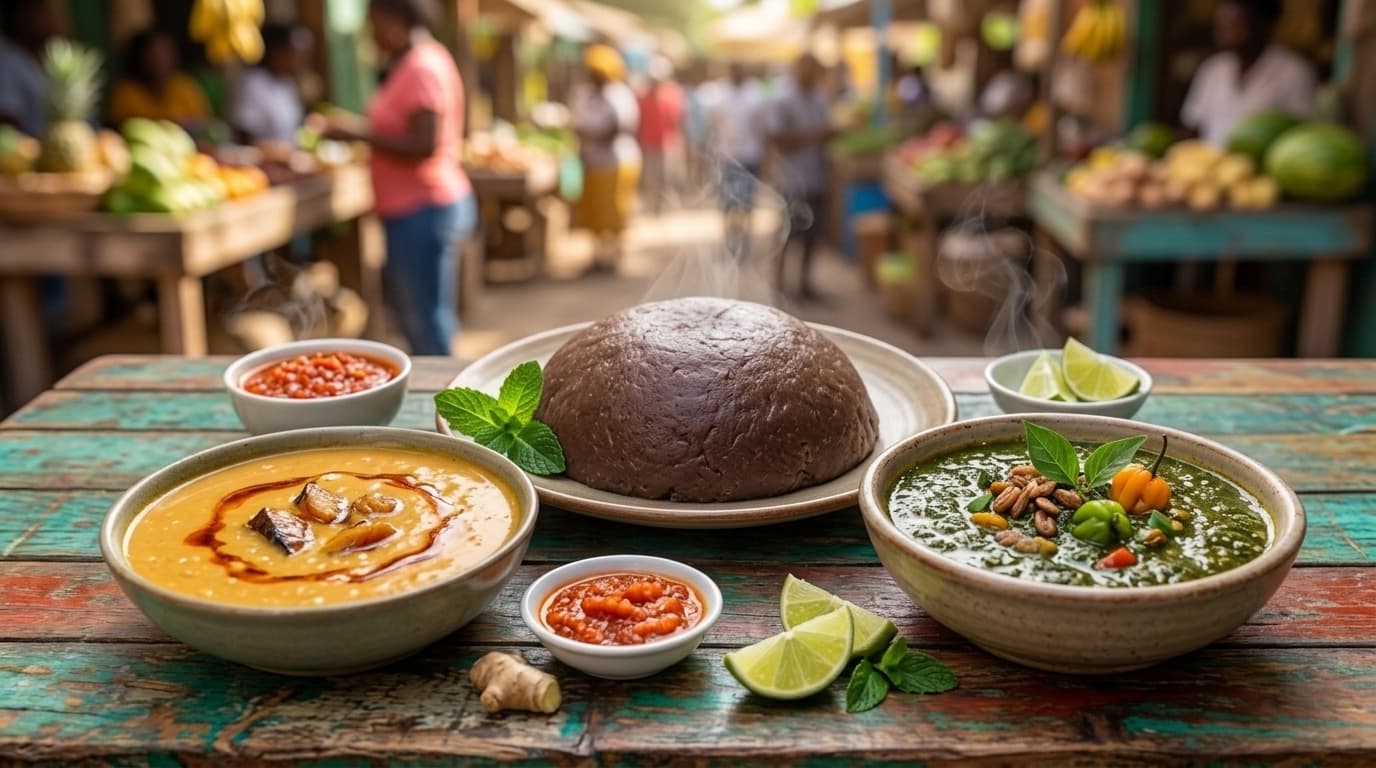
Amala is defined as much by what it is eaten with as by what it is, and the classic partnership is amala with ewedu and gbegiri. Ewedu is a smooth, slightly slippery green soup made from jute leaves, light and savoury, which you can read about in our guide to ewedu. Gbegiri is a smooth, pale, savoury soup made from peeled beans. Ladled together over amala, often with a red pepper stew and meat added on top, they make the beloved combination that Yoruba eaters call abula.
This trio is a signature of Yoruba eating houses and celebrations, the sort of plate that people travel for. The soft dark amala, the green ewedu, the golden gbegiri and the red stew make a plate that is as satisfying to eat as it is distinctive to look at. You tear off a piece of amala, dip it through the soups, and eat, and the different textures and flavours combine in the mouth. Amala can be eaten with other Nigerian soups too, such as egusi soup, but ewedu and gbegiri are its traditional companions.
How is amala eaten?
Amala is eaten by hand, in the way of West African swallows, and the method is simple once you have seen it. You take a small piece of the soft amala, roll it lightly between your fingers, press a small dent into it, and use it to scoop up the soup, then swallow it without much chewing, which is where the name swallow comes from. It is warm, soft and filling, and it is meant to be eaten with the soup rather than on its own, since the amala itself is mild and the flavour comes from the soups and stew.
Because it is quick to make from flour, amala is a practical everyday food as well as a celebration one, cooked fresh and eaten straight away while soft and warm. It is filling and economical, which is part of why it is such a staple. For anyone new to Yoruba food, amala with ewedu and gbegiri is a wonderful introduction, best eaten warm and fresh. However it is served, the soft dark swallow and the soups together are the heart of the meal.
Where to buy yam flour in the UK
Making amala at home in Britain is easy, because the yam flour does the hard work for you and is widely sold. African food shops that serve Nigerian communities stock elubo, the yam flour, usually in bags labelled yam flour or amala, and often the cassava and plantain versions too. All you add is hot water, so a bag of flour and a wooden turner are almost all you need. On the same shelves you will find the ingredients for ewedu and gbegiri, dried jute leaves and peeled beans, along with the pepper, crayfish and seasoning to finish the meal.
If you are new to amala, the shopkeeper can point you to the right yam flour, explain the difference between the yam, cassava and plantain versions, and suggest what to cook with it. You can find African food stores in London or look up African food stores in Manchester to find a shop near you. If you would rather taste it first, amala with ewedu and gbegiri is served at Nigerian restaurants and buka-style eating houses, which is a great way to try it before making your own.
Frequently asked questions
What is amala?
Amala is a smooth, soft, dark brown swallow from the Yoruba people of southwestern Nigeria, made from yam flour called elubo, which is dried peeled yam ground to a fine powder. The flour is stirred into hot water until it becomes a smooth, stretchy dough, eaten by scooping up soup. It is classically served with ewedu and gbegiri.
Why is amala dark in colour?
The dark brown colour of amala is entirely natural and comes from the yam. As peeled yam is dried to make the flour, elubo, it darkens, so the flour and the finished amala are a deep brown with nothing added. This dark colour is the mark of proper yam amala, not a fault or a sign of colouring.
What is amala eaten with?
Its classic partners are ewedu, a smooth green jute-leaf soup, and gbegiri, a smooth soup made from peeled beans, often served together with a red pepper stew and meat as a combination called abula. Amala can also be eaten with other Nigerian soups such as egusi. You tear off a piece and use it to scoop up the soup.
What is amala made from?
Traditional amala is made from yam flour, called elubo, which is peeled yam that has been dried and milled to a fine powder. There are also versions made from cassava flour, called amala lafun, which is paler, and from unripe plantain flour, called amala ogede. All are cooked by stirring the flour into hot water until smooth.
Where can I buy yam flour in the UK?
African food shops serving Nigerian communities sell elubo, the yam flour, usually labelled yam flour or amala, along with the cassava and plantain versions. You add only hot water to cook it. The same shops stock the dried jute leaves and peeled beans for ewedu and gbegiri, and the shopkeeper can advise on which flour to choose.