What Is Akara? The West African Bean Fritter Explained
Akara is a fluffy, savoury West African fritter made from blended black-eyed beans and deep-fried. Here is what it is and where to buy the beans.
Quick answer
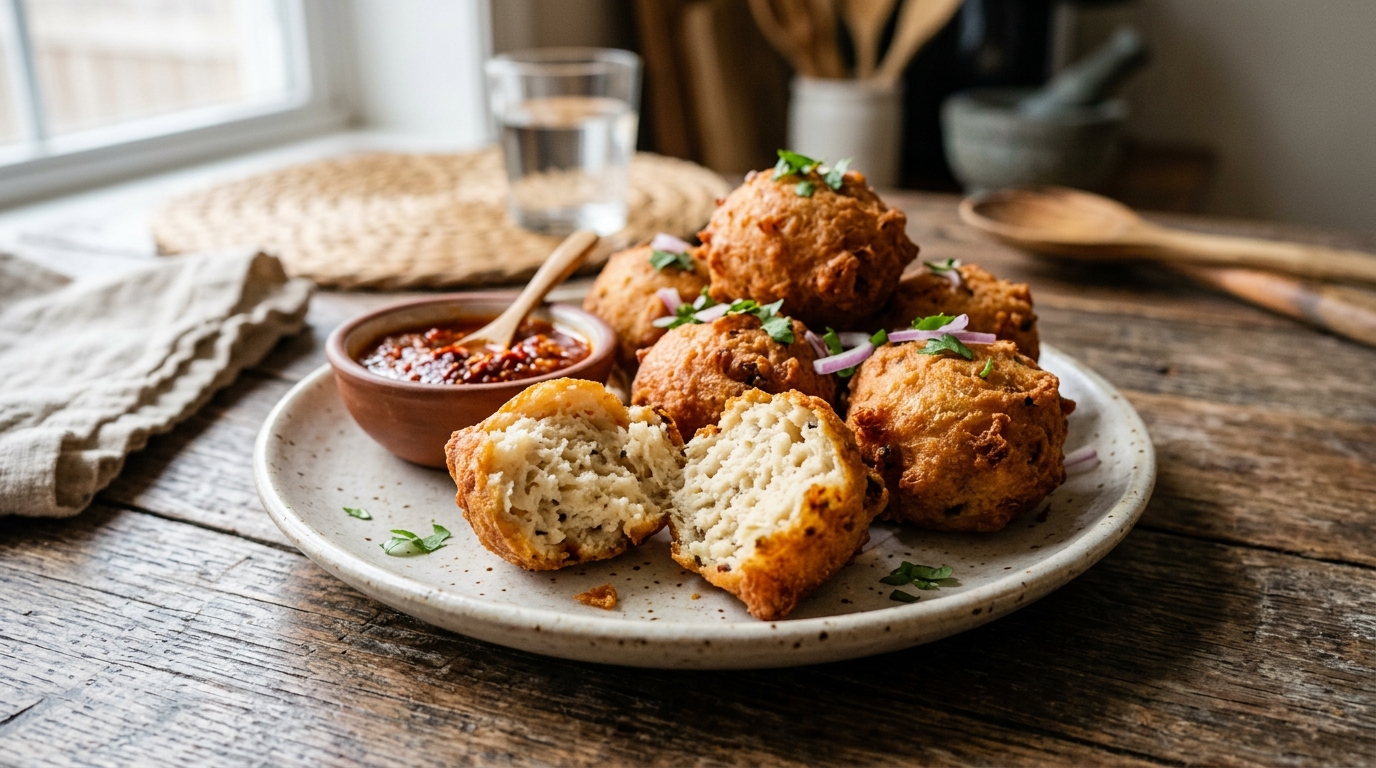
Akara is a savoury deep-fried fritter made from black-eyed beans, hugely popular in Nigeria and across West Africa. The beans are peeled, soaked and blended into a smooth batter with onion, pepper and salt, then whipped until light and dropped in spoonfuls into hot oil, where they puff up into crisp, golden balls with a soft, fluffy inside. It is classic breakfast and street food, often eaten with pap, a smooth corn porridge, or with bread. Akara is naturally vegan and gluten free, since it is just beans and seasonings, though it is fried, and it crossed the Atlantic with enslaved West Africans to become acaraje in Brazil. In the UK the black-eyed beans and other ingredients are sold by African and Caribbean food shops.
Add African Stores as a preferred source on Google. You'll see more of our guides in Google's Top Stories when you search.
Add as a preferred sourceWhat to remember
- Akara is a deep-fried fritter made from blended black-eyed beans, popular in Nigeria and across West Africa.
- The peeled beans are blended with onion, pepper and salt, then whipped light and fried into crisp, fluffy balls.
- It is classic breakfast and street food, often eaten with pap, a smooth corn porridge, or with bread.
- It is naturally vegan and gluten free, being simply beans and seasonings, though it is deep-fried.
- It travelled across the Atlantic with enslaved West Africans and became acaraje in Brazil.
For Nigerians and West Africans in Britain, akara is the taste of a weekend morning at home. It is the smell of frying wafting through the house, the pairing of hot akara and soft pap that so many grew up eating, the small treat bought from a familiar stall on the way somewhere. It belongs to childhood breakfasts, to grandmothers and mothers standing over the pan, to the easy comfort of a food that costs little and gives a lot, and frying a batch far from home brings all of that back in an instant.
There is heritage in it too, and a quiet pride. Akara carries a story that stretches from a Nigerian kitchen all the way to a Bahian street corner, a food that survived the Atlantic crossing and still feeds people on both sides of the ocean. Making it in a British kitchen keeps that thread alive, and sharing a plate of hot, fluffy akara with family, or introducing a friend to their first bite, is a small act of welcome. That warmth and history, wrapped in a simple bean fritter, is the quiet gift of akara.
What is akara?
Akara is a bean fritter, and a wonderfully simple one at heart. Its base is the humble black-eyed bean, the small cream-coloured bean with a dark spot that is a staple across West Africa. To make akara, the beans are soaked and their skins removed, then blended with onion, fresh pepper and salt into a smooth, thick batter. The crucial step is whipping or beating that batter until it is light and airy, because it is the air worked into it that makes the finished fritters puff up and stay fluffy inside rather than dense. Spoonfuls are then dropped into hot oil and fried until deep golden and crisp.
The result is a small, round fritter that is crunchy on the outside and soft, savoury and almost cake-like within. It is deeply satisfying, cheap to make, and endlessly popular, sold hot from roadside stalls in the mornings and made at home for breakfast and snacks. Few foods do so much with so little.
Akara is a beloved part of the West African table, and you can see where it fits in our guides to Nigerian food and the best African snacks.
What makes up akara
The star of akara is the black-eyed bean, known in Nigeria and beyond simply as beans, and understanding it helps you understand the dish. These beans are nutritious and high in protein, which is part of what makes akara such a good, filling food, and their mild, earthy flavour is the perfect blank canvas for the onion and pepper worked into the batter. Peeling the beans, removing their skins after soaking, is the step that gives akara its smooth texture and pale colour, and while it takes a little effort, it is what separates a good akara from a heavy one.
Because akara is essentially just beans, onion, pepper and salt, fried in oil, it is naturally free from wheat and dairy and suits vegan and gluten free eaters, though as a deep-fried food it is a treat rather than an everyday health dish. The same bean batter, made a little differently and steamed rather than fried, becomes another Nigerian favourite, moi moi, a savoury bean pudding, which shows how versatile this one humble bean can be.
Find African and Caribbean shops near you
Free to use, no sign-up needed.
How is akara eaten?
Akara is above all a breakfast food, and its classic partner is pap, known variously as ogi, akamu or koko, a smooth, slightly sour porridge made from fermented corn. The warm, soft porridge against the crisp, savoury fritter is a much-loved combination across Nigeria, and for many people it is the taste of a weekend morning. Akara is also eaten tucked into soft bread as a kind of fritter sandwich, a filling and popular way to enjoy it on the go.
Beyond breakfast, akara is a snack and a party food, served at gatherings and sold at markets and roadsides throughout the day. It is best eaten fresh and hot, when the outside is at its crispest, though it is good warm too. Simple to love and easy to share, it appears everywhere from family kitchens to street corners, which is exactly why it is so woven into everyday life.
Akara across the atlantic
One of the most fascinating things about akara is that it is not confined to West Africa, because it made the journey across the Atlantic. Enslaved West Africans, particularly Yoruba people, carried the knowledge of this bean fritter with them to the Americas, and in Brazil it lives on as acaraje, a street food strongly associated with Bahia and with Afro-Brazilian culture and religion. There, the fritter is often split and filled with spiced fillings such as prawns and a chilli and palm oil sauce, a local evolution of the same West African idea.
That connection makes akara a small, edible piece of history. It is a reminder that West African food traditions crossed the ocean and put down roots in the Caribbean and the Americas, surviving and adapting even in the hardest of circumstances. When you eat akara or acaraje, you are tasting a thread that ties West Africa to the wider African diaspora, one that has endured for centuries.
Where to buy the ingredient in the UK
Making akara at home in Britain is very achievable, because the ingredients are simple and easy to find. African and Caribbean food shops sell black-eyed beans, both whole and sometimes already peeled or as bean flour, which saves the work of removing the skins. On the same shelves you will find the pap, or ogi, to serve alongside, as well as the fresh peppers, onions and palm or vegetable oil you need. Buying peeled beans or bean flour is the easiest route for a first attempt.
If you would rather taste akara before making it, look out for it at Nigerian and West African restaurants, takeaways and market stalls, and at community events where it is often freshly fried. For the ingredients to cook it yourself, you can find African food stores near you or look up Caribbean food stores near you.
Your questions
Frequently asked questions
Akara is a savoury deep-fried fritter made from blended black-eyed beans, popular in Nigeria and across West Africa. The peeled beans are blended with onion, pepper and salt, whipped until light, and fried into crisp, golden balls with a soft, fluffy inside. It is a classic breakfast and street food.
Black-eyed beans, which are soaked and peeled, then blended with onion, fresh pepper and salt into a smooth batter and whipped lightly before frying. Because it is just beans and seasonings fried in oil, akara is naturally vegan and gluten free, though it is a deep-fried treat rather than an everyday health food.
Its classic partner is pap, also called ogi or akamu, a smooth, slightly sour porridge made from fermented corn, and the warm porridge with the crisp fritter is a much-loved breakfast. Akara is also eaten in soft bread as a fritter sandwich, and served as a snack and party food.
They are the same dish at root. Akara travelled to Brazil with enslaved West Africans and lived there as acaraje, strongly associated with Bahia and Afro-Brazilian culture. Brazilian acaraje is often split and filled with spiced fillings such as prawns, a local evolution of the West African fritter.
African and Caribbean food shops sell black-eyed beans whole, and sometimes already peeled or as bean flour, which saves work, along with pap and the peppers and oil you need. You can also find akara ready-made at Nigerian and West African restaurants, takeaways and market stalls. African Stores lists African and Caribbean food shops across the UK, so you can find one near you.
Was this guide helpful?
Free membership
Save this guide and hear when new shops open near you
Save shops, follow the ones you love and get your free member card to show at participating shops for member offers.
Keep reading
More guides
- What isWhat Is Ofada Rice? The Local Nigerian Rice ExplainedOfada rice is an aromatic local Nigerian rice, served with a spicy palm oil sauce.Read article
- What isWhat Is White Soup? Nigerian Ofe Nsala ExplainedWhite soup, or ofe nsala, is a light Igbo soup made without palm oil, thickened with yam.Read article
- What isWhat Is Xalwo? The Sweet Somali Halwa ExplainedA plain language guide to xalwo, the sweet, jelly like Somali halwa flavoured with cardamom and enriched with ghee, including what it is made of, how it is served at celebrations and where to find it in the UK.Read article