The short answer
Ackee is a soft, creamy, pale yellow tropical fruit that tastes mild and savoury, often compared to scrambled eggs. Native to West Africa, it became the national fruit of Jamaica, where it is the base of the classic dish ackee and saltfish. Ackee must only be eaten when it is fully ripe and has opened naturally on the tree, as unripe fruit is poisonous. For this reason, almost all ackee sold in the UK is canned, prepared from properly ripened fruit and safe to eat.
What to remember
- Canned ackee is gentle, quick to cook and easy to find in Caribbean and African food shops across the UK.
- Only fully ripe ackee that has opened on the tree is safe to eat, which is why the ackee on British shelves is nearly always canned.
- It is the heart of ackee and saltfish, Jamaica's beloved national dish.
- It travelled from West Africa to the Caribbean and became the national fruit of Jamaica.
- Ackee is a soft, pale yellow fruit with a mild, buttery taste that many people say is close to scrambled egg.
For many Jamaicans, ackee is not really an ingredient at all. It is a feeling. As the national fruit of Jamaica, it carries a sense of identity that few foods can match, and it appears at exactly the moments that matter most: the slow Sunday morning breakfast, the family table after church, and the holidays when relatives gather and someone inevitably makes ackee and saltfish. The smell of it cooking with thyme and Scotch bonnet is, for people across the Jamaican diaspora, the smell of home.
What makes ackee special is how much history sits inside something so gentle. A fruit that began in the forests of West Africa crossed an ocean, settled in the Caribbean and became so beloved that an island claimed it as its own.
When a family in Britain opens a tin of ackee on a Sunday and folds it through saltfish, they are cooking a dish that ties them to Jamaica and, through Jamaica, all the way back to West Africa. That is a lot of meaning for one soft, pale yellow fruit to carry, and it carries it beautifully.
What is Ackee
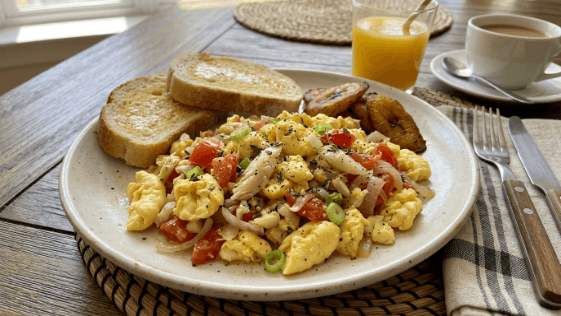
Ackee is one of those foods that surprises people the first time they meet it. It looks like a fruit and grows like a fruit, yet on the plate it behaves like something savoury. When it is cooked, ackee turns soft, creamy and pale yellow, breaking into gentle curds that look remarkably like scrambled egg.
The taste follows the look. It is mild, faintly buttery and slightly nutty, with none of the sweetness you might expect from a tropical fruit. That is exactly why cooks reach for it at breakfast and treat it as the centre of a proper meal rather than a dessert.
The fruit grows on a large evergreen tree that produces bright red, pear-shaped pods. As each pod ripens, it splits open on its own, revealing three glossy black seeds sitting on soft, creamy sections called 'arils'. Those arils are the part people eat. The colour, the softness and that clean savoury flavour are what have made ackee a fixture of Caribbean cooking.
From West Africa to Jamaica
Ackee did not begin in the Caribbean. It is native to West Africa, growing across the forests of countries like Ghana, Nigeria and Cameroon, where its very name comes from the Akan word for the fruit.
It crossed the Atlantic during the eighteenth century, carried along the same painful routes as so many other West African foods, and found a second home in Jamaica.
There, ackee took root in a way it never quite did anywhere else. Jamaicans embraced it, cooked with it and folded it so deeply into daily life that it eventually became the national fruit of the island.
The plant even carries a nod to that history in its botanical name, Blighia sapida, named after Captain William Bligh, who helped spread it further through the region. If you want to understand how one ingredient can carry a whole story of migration and belonging, ackee is a fine place to start. You can read more about that heritage in our guide to [Jamaican food](/blog/jamaican-food) and the wider world of [Caribbean food](/blog/caribbean-food).
The Heart of Ackee and Saltfish
Ask anyone from Jamaica about ackee, and the conversation turns quickly to one dish. Ackee and saltfish is the island's national dish, and it is the reason most people meet the fruit at all. Salted cod is soaked to soften it and draw out some of the salt, then flaked and cooked with onions, tomatoes, sweet peppers, thyme, and Scotch bonnet. The ackee goes in near the end and is folded through gently because it is delicate and falls apart if it is stirred too hard.
The result is a warm, savoury plateful where the mild ackee balances the deep, salty fish, usually served with fried dumplings, boiled green banana, breadfruit, or hard dough bread. It is a Sunday breakfast, a holiday centerpiece, and a taste of home all at once. If you would like to make it yourself, follow our [ackee and saltfish recipe](/recipe/ackee-and-saltfish) for the full method.
Why Ripeness Matters
Here is the part every cook should understand, and it is important to be clear rather than alarmed about it. Ackee must only be eaten when it is fully ripe and has opened naturally on the tree. That natural opening is the fruit's own signal that it is ready.
Unripe ackee, and the pink membrane and seeds inside the pod, contain a natural compound called hypoglycin A. In unripe fruit this compound is present at levels that are poisonous, and eating ackee that has not properly ripened has historically been linked to a condition known as Jamaican vomiting sickness.
This is simply how the fruit works, and it is why growers and cooks across the Caribbean follow one firm rule: wait for the pod to open on its own, and never force it. As the fruit ripens naturally on the tree and the pod splits, the levels of that compound in the edible arils fall to a safe level.
None of this should put you off ackee. It is a matter of respecting the fruit rather than fearing it, in the same way many everyday foods need proper preparation. The key is that fresh ackee is prepared by people who know exactly when it is ready, and that is precisely what the canning process guarantees.
Is Ackee sold in the UK?
This is where things become very simple for anyone shopping in Britain. You will almost never see fresh ackee here. Instead, it is sold in tins, and that is a good thing. Canned ackee is prepared from fruit that has been allowed to ripen and open properly before it is harvested, then cleaned and packed in brine or water. By the time it reaches a British shelf, it is fully safe to eat and needs only gentle warming through.
That safety is the whole reason canning became the standard. It lets people far from where ackee grows enjoy the fruit without having to judge ripeness themselves, and it is why almost all ackee in the UK is sold canned.
You will find it in Caribbean and African food shops up and down the country. If you are looking for a tin near you, browse the [Caribbean and African food stores in London](/african-food-stores-in-london) or search for a shop in your own area.
How to Use Ackee
Cooking with canned ackee is genuinely easy, and the golden rule is a light hand. Drain the tin and rinse the ackee gently, then add it towards the end of whatever you are cooking so it only warms through. Fold, do not stir vigorously, because the soft arils break apart quickly, and you want to keep some shape on the plate.
Beyond the classic saltfish pairing, ackee is wonderfully versatile. It works in a simple sauté with onions, tomatoes, and peppers for a meat-free breakfast, folds into rice dishes, sits happily alongside callaloo or plantain, and even stands in for egg in plant-based cooking thanks to its soft texture and mild taste. Season it well, keep the heat gentle, and let its quiet, buttery character do the work.
Frequently asked questions
What does ackee taste like?
Ackee is mild and savoury rather than sweet, with a soft, creamy, slightly buttery texture. Most people say it reminds them of scrambled eggs, which is why it feels so at home on a breakfast plate.
Is ackee safe to eat?
Yes, when it is properly ripe. Ackee is only safe once it has fully ripened and opened naturally on the tree, because unripe fruit is poisonous. The canned ackee sold in UK shops is made from properly ripened fruit and is perfectly safe, which is exactly why almost all ackee here is sold in tins.
Is ackee a fruit or a vegetable?
Ackee is a fruit, botanically speaking, but it is cooked and eaten like a vegetable. Its mild, savoury flavour means it belongs in a savoury meal rather than a sweet one.
Where can I buy ackee in the UK?
You will find canned ackee in Caribbean and African food shops across the country. Take a look at the [Caribbean and African food stores in London](/african-food-stores-in-london) or search for a shop near you to pick up a tin.
How do I cook canned ackee?
Drain and rinse it gently, then add it near the end of cooking so it only warms through. Fold it in carefully rather than stirring hard, as the soft pieces break apart easily. It is lovely with saltfish, or simply sauteed with onions, tomatoes and peppers.