The short answer
Black seed oil is pressed from the seeds of Nigella sativa, a flowering plant also known as kalonji or black cumin. The seeds have been used as a food and traditional remedy across Africa, the Middle East and South Asia for centuries, with a warm, peppery, slightly bitter taste. It is sold as whole seed, cold-pressed oil and capsules. It is a food and traditional remedy, not a medicine, so speak to a doctor before taking it for any health reason.
What to remember
- Treat it as a food, not a cure. Talk to a doctor first if you are pregnant, breastfeeding or taking any medication.
- It has a long and respected place in African, North African, Middle Eastern and South Asian tradition.
- You can find it as a whole seed for the kitchen, as cold-pressed oil, and as capsules.
- The taste is warm and peppery with a gentle bitterness, and a little goes a long way in cooking.
- Black seed comes from Nigella sativa, the same small black seeds you may know as kalonji or black cumin on bread and in pickles.
There is a saying that has followed black seed across the Muslim world for centuries, that it is a remedy for everything but death. Whether or not you take that literally, it captures something real about how deeply this small seed is woven into home life.
In many African, North African and Middle Eastern households it is not an exotic supplement at all. It is the jar on the shelf that a grandmother reaches for, the seed sprinkled on bread that comes out of the oven, and the spoon of oil stirred into honey when someone in the family is feeling run down.
Its Arabic name, habbat al barakah, the seed of blessing, tells you how it is held. It carries the weight of generations who kept it in the kitchen and passed it down without needing a label or a health claim to explain why.
For a lot of people in the UK, buying a bag of black seeds is a small way of keeping that thread going, a taste and a habit that travels with a family wherever it settles. That is the quiet gift of an ingredient like this. It belongs to no single country and to every home that has ever kept it.
What is Black Seed
Black seed is the small, jet-black seed of Nigella sativa, a flowering plant in the buttercup family that grows across parts of Africa, the Middle East, southern Europe and South Asia.
You will hear it called several names depending on where your family is from. In Nigeria and much of West Africa it is often just called black seed. In South Asian kitchens it is kalonji. In many Middle Eastern and North African homes it is habbat al barakah, which loosely means the seed of blessing, and it is also widely known as black cumin, though it is not related to true cumin.
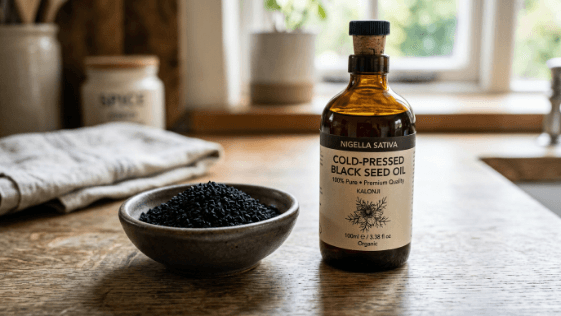
The seeds are tiny, roughly the size of a sesame seed, angular and matt black. When you crush or warm them, they give off a sharp, peppery, almost oregano-like aroma. Black seed oil is what you get when those seeds are cold-pressed, a dark golden to deep amber oil with a strong, spicy, bitter edge. Cold pressing simply means the oil is squeezed out without high heat, which is why good bottles usually say cold-pressed on the label.
History on Black Seed Oil Across three Regions
Few kitchen ingredients carry as much history as this one. Black seed has been used for thousands of years across ancient Egypt, the wider Middle East, North Africa and South Asia, both as a flavouring and as a household remedy. Seeds have famously been found in ancient Egyptian tombs, which tells you how far back its use as a valued item stretches.
Across the centuries it travelled the trade routes east into India and south across the Sahara, settling into the everyday cooking and home traditions of each place it reached.
That shared heritage is part of why you will find black seed in so many communities across the UK today, from Nigerian and Ghanaian households to Egyptian, Moroccan, Sudanese, Somali, Pakistani and Bangladeshi ones. It is one of those quiet threads that connects a lot of very different kitchens.
What it Tastes like and How to Cook with it
The flavour is the reason to keep it in your cupboard even if you never think of it as a remedy. Black seed is warm and peppery with a bitter, slightly nutty finish, somewhere in the family of oregano, cumin and onion but really its own thing. Toasting the whole seeds gently in a dry pan brings the aroma out and softens the bitterness.
In practice, people use it a lot like a spice:
- Scattered over flatbreads, naan and other breads before baking, where it is one of the most recognisable toppings.
- Stirred into pickles and preserves, especially across South Asian and Middle Eastern cooking.
- Added to spice blends, lentils, roasted vegetables and savoury pastries.
- A few drops of the oil drizzled over salads, hummus or yoghurt, or stirred into honey, which is a common way to take it by the spoon.
Because the flavour is strong, start small. A teaspoon of seeds or a few drops of oil is usually plenty. If you want to explore the cooking traditions it belongs to, our guide to [Egyptian food](/blog/egyptian-food) and our wider look at [African food](/blog/african-food) are good places to start.
The Forms You will find Black Seed
You will generally see black seed sold in three forms:
- Whole seed. The most versatile and the cheapest. Best for cooking, and you can crush or toast it yourself.
- Cold-pressed oil. A concentrated form, usually taken by the spoon or added to food. Look for cold-pressed on the label and keep it somewhere cool and dark, as it can turn rancid over time.
- Capsules. A convenient, measured form of the oil for people who dislike the taste.
Why it is Valued and the Cautions that Matter
Black seed is one of the most respected traditional remedies in the regions it comes from, and it has been studied by researchers with growing interest. Traditionally it has been used as a general tonic and to support everyday wellbeing.
Some studies suggest it may have effects worth investigating further, but the research is still developing and much of it is early or small in scale, so it is honest to say the picture is not settled.
Here is the important part, written plainly.
This article is general information, not medical advice. Black seed and black seed oil are foods and traditional remedies, not medicines. They should not be used to treat, cure or prevent any illness, and nothing here is a substitute for advice from a qualified doctor or pharmacist.
If you are considering taking black seed oil for a health reason, speak to your doctor first. This is especially important if you are pregnant or breastfeeding, if you take any prescription medication, or if you manage a condition such as diabetes.
Black seed may affect blood sugar and may interact with some medicines, so caution is sensible, and a quick conversation with a professional is the right first step. Used as a food, in the amounts you would cook with, it has a long and ordinary history in the kitchen.
None of that should put you off enjoying it as an ingredient. It simply means treating the health claims you see online, some of which are exaggerated, with a healthy dose of care.
Frequently asked questions
Is black seed the same as kalonji and black cumin?
Yes, they are the same seed, Nigella sativa. Kalonji is the common South Asian name, and black cumin is another everyday name for it, though it is not botanically related to true cumin. Different communities simply call it different things.
How do people take black seed oil?
Usually a small amount by the spoon, on its own or stirred into honey, yoghurt or a drink to soften the strong taste. Some people prefer capsules for convenience. Start with a small amount, and if you are taking it for a health reason, ask your doctor about a sensible amount first.
Is black seed oil safe for everyone?
As a food, in cooking amounts, it has a long, ordinary history. As a concentrated oil or supplement, it needs more care. It is best avoided or discussed with a doctor first if you are pregnant or breastfeeding, if you take medication, or if you have a condition such as diabetes, because it may affect blood sugar and interact with some medicines.
What does it taste like?
Warm and peppery with a bitter, slightly nutty finish. The whole seed on bread is milder than the oil, which is quite strong and best used a few drops at a time.
Where can I buy it in the UK?
Most African, North African, Middle Eastern and South Asian grocers stock it, as whole seed, oil and often capsules. You can find shops near you through our list of [African food stores near you](/african-food-stores-in-london).